

Motor Winding: A Complete Guide to Motor Winding Types, Diagrams, Rewinding, and Coil Design
Electric motors power everything from industrial automation systems and EVs to pumps, HVAC equipment, robotics, and household appliances. At the heart of every motor lies a critical component responsible for converting electrical energy into mechanical motion: the motor winding.
The performance, efficiency, torque, speed, heat dissipation, and reliability of an electric motor are all closely linked to its winding design. Whether engineers are evaluating different types of motor windings, studying a motor winding diagram, understanding rewinding of electric motor processes, or selecting the right winding configuration for a new application, motor winding remains one of the most important aspects of motor engineering.
Industry references consistently describe motor winding as the arrangement of conductive wire that creates the magnetic field responsible for generating motor motion.
What Is Motor Winding?
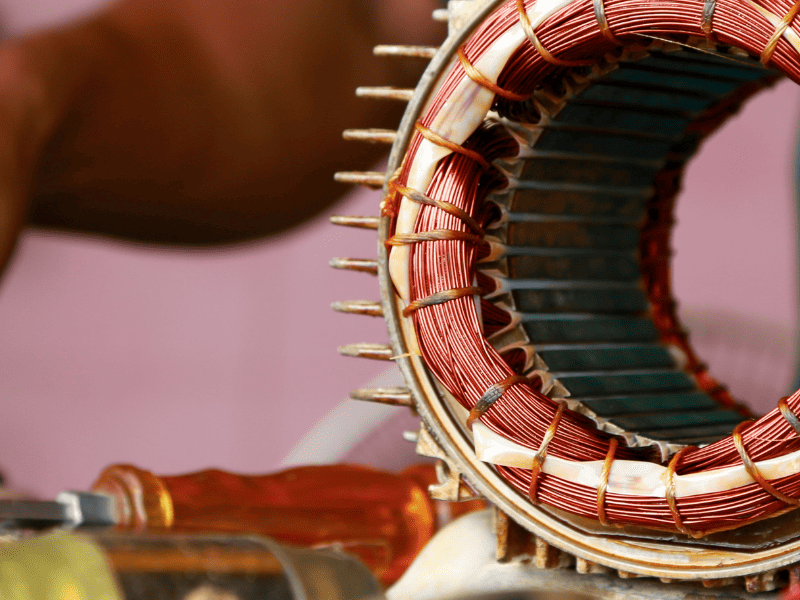
Motor winding refers to the insulated conductive wire wound around specific sections of a motor to generate the electromagnetic field required for operation.
When electrical current flows through the winding, it creates a magnetic field. This magnetic field interacts with the rotor and produces mechanical motion.
A properly designed motor winding directly affects:
- Motor efficiency
- Torque production
- Speed characteristics
- Energy consumption
- Thermal performance
- Operational lifespan
Without correctly designed motor windings, motors would be unable to generate the electromagnetic forces necessary for rotation.
Why Is Motor Winding Important?
Motor winding is often described as the heart of the motor because it determines how effectively electrical energy is converted into mechanical energy.
A well-designed winding helps:
- Improve efficiency
- Increase torque output
- Reduce heat generation
- Improve reliability
- Extend motor life
- Lower energy losses
As motors become more advanced, the quality of winding design plays an even greater role in overall performance.
How Does Electric Motor Winding Work?
The operating principle of electric motor winding is based on electromagnetism.
When current passes through a conductor, a magnetic field forms around it. By arranging conductors into coils and winding them around magnetic cores, the magnetic field becomes strong enough to drive motor operation.
How Does Electric Motor Winding Create Motion?
The process typically follows these steps:
- Electrical current flows through the winding.
- A magnetic field is generated.
- The field interacts with the rotor.
- Electromagnetic force develops.
- The rotor rotates.
- Mechanical power is produced.
The effectiveness of this process depends heavily on the design and arrangement of the winding.
What Are the Main Types of Motor Windings?
Understanding the various types of motor windings helps engineers select the most suitable design for specific applications.
What Is Stator Winding?
Stator winding is located on the stationary portion of the motor known as the stator.
Its primary role is to generate the magnetic field responsible for motor operation.
Benefits include:
- High efficiency
- Reliable operation
- Excellent torque production
- Broad industrial applicability
Stator windings are widely used in AC motors, BLDC motors, and industrial drives.
What Is Rotor Winding?
Rotor winding is located on the rotating component of the motor.
Its function is to interact with the magnetic field generated by the stator.
Applications include:
- Wound-rotor induction motors
- Synchronous motors
- Variable-speed systems
Rotor windings help control torque and improve operational flexibility.
What Is Lap Winding?
Lap winding is commonly used in DC motors.
Characteristics include:
- High current-carrying capability
- Good performance under heavy loads
- Reliable operation
- Suitable for low-voltage applications
Because of its ability to handle high current, lap winding is widely used in industrial systems.
What Is Wave Winding?
Wave winding connects conductors in a wave-like pattern around the armature.
Advantages include:
- Higher voltage generation
- Better efficiency in specific applications
- Reduced conductor requirements
- Improved performance in high-voltage systems
Wave winding is often used where voltage levels are more important than current capacity.
What Are the Most Common Motor Winding Types Used Today?
Several modern motor winding types are used depending on motor design and application requirements.
What Is Distributed Winding?
Distributed winding spreads conductors across several stator slots.
Benefits include:
- Smooth torque production
- Lower vibration
- Reduced noise
- Better magnetic field distribution
This configuration is widely used in industrial motors and generators.
What Is Concentrated Winding?
Concentrated winding places coils around individual stator teeth.
Advantages include:
- Compact motor design
- Improved slot utilization
- Simpler manufacturing
- Lower material consumption
Concentrated winding is commonly used in BLDC motors and EV motor applications.
What Does a Motor Winding Diagram Show?
A motor winding diagram is used to illustrate how winding conductors are arranged within a motor.
These diagrams help engineers and technicians understand:
- Coil placement
- Phase arrangement
- Slot assignments
- Electrical connections
- Rotation directions
A motor winding diagram serves as a blueprint during manufacturing, troubleshooting, and repair operations.
Why Is a Motor Winding Diagram Important?
A motor winding diagram provides critical information that helps:
- Ensure proper winding installation
- Support maintenance procedures
- Simplify troubleshooting
- Improve manufacturing accuracy
Without accurate winding diagrams, winding errors can significantly affect motor performance.
What Information Is Included in an Electric Motor Winding Diagram?
An electric motor winding diagram generally includes:
- Coil groups
- Slot numbering
- Phase connections
- Terminal designations
- Current flow direction
These diagrams help ensure proper electrical configuration throughout the motor.
How Is an Electrical Motor Winding Diagram Used?
An electrical motor winding diagram is typically used during:
- Motor manufacturing
- Motor rewinding
- Repair operations
- Quality inspections
- Engineering analysis
It serves as a reference document for both technicians and design engineers.
What Is a 3 Phase Motor Winding Diagram?
A 3 phase motor winding diagram illustrates the winding configuration for three-phase motors.
Three-phase motors are widely used because they provide:
- Higher efficiency
- Better starting torque
- Smoother operation
- Improved power density
The diagram shows how the three phases are arranged and interconnected.
Why Is a 3 Phase Motor Winding Diagram Important?
A 3 phase motor winding diagram helps technicians:
- Verify winding connections
- Identify faults
- Perform rewinding operations
- Ensure proper phase relationships
Correct phase configuration is essential for normal motor operation.
What Is Motor Coil Winding?
Motor coil winding refers to the process of creating the individual coils that make up the motor winding system.
The process typically involves:
- Wire feeding
- Tension control
- Coil formation
- Turn counting
- Insulation management
The quality of motor coil winding directly affects motor performance, efficiency, and reliability.
Why Is Winding Motor Coil Precision Important?
Precision during winding motor coil production helps achieve:
- Consistent coil geometry
- Improved efficiency
- Reduced heat generation
- Better electromagnetic performance
- Higher manufacturing quality
As modern motors become more sophisticated, precise coil winding has become increasingly important.
What Does a Motor Coil Diagram Show?
A motor coil diagram helps visualize:
- Coil layout
- Connection points
- Phase relationships
- Terminal assignments
These diagrams are often used during manufacturing, maintenance, and motor rewinding operations.
What Is Rewinding of Electric Motor?
The rewinding of electric motor refers to replacing damaged or worn motor windings with new windings.
Motor rewinding is often performed when the motor’s magnetic and mechanical components remain usable but the winding has deteriorated.
Common reasons for rewinding include:
- Electrical failure
- Insulation breakdown
- Overheating
- Moisture damage
- Aging windings
What Are the Steps in Rewinding of Electric Motor?
Although procedures vary depending on motor type, the process generally includes:
- Motor disassembly
- Removal of existing winding
- Core inspection
- Installation of new insulation
- Winding insertion
- Electrical connection
- Testing and verification
A properly executed rewinding process can significantly extend motor life.
When Should Rewinding of Electric Motor Be Considered?
Rewinding may be appropriate when:
- The stator core remains in good condition.
- Replacement motors are expensive.
- Downtime costs are significant.
- Specialized motors are difficult to replace.
However, engineers should evaluate efficiency and repair costs before deciding on rewinding.
How Can Manufacturers Improve Motor Winding Quality?
Consistent winding quality requires a combination of design expertise and advanced manufacturing technology.
What Best Practices Improve Motor Winding Performance?
Manufacturers should focus on:
- Proper wire tension control.
- Accurate coil placement.
- High-quality insulation materials.
- Automated winding systems.
- Rigorous testing procedures.
- Consistent process control.
These best practices help improve performance while reducing defects.
Why Are Modern Winding Machines Important?
Advanced winding technologies provide:
- Greater precision
- Improved repeatability
- Higher productivity
- Reduced scrap rates
- Better quality control
Automated winding solutions have become essential for modern motor manufacturing.
Conclusion
Motor winding remains one of the most important elements of electric motor design and manufacturing. Whether examining types of motor windings, analyzing a motor winding diagram, understanding a 3 phase motor winding diagram, studying motor coil winding, or evaluating the rewinding of electric motor, the quality of the winding directly influences efficiency, reliability, torque, and operational performance.
By understanding different motor winding types, proper coil arrangements, and advanced winding technologies, manufacturers can produce motors that deliver higher performance while maintaining long-term reliability.
At Synthesis Winding Technologies, we combine decades of expertise in motor winding automation, coil winding machinery, stator winding systems, and advanced manufacturing solutions. Our engineering-driven approach helps manufacturers achieve superior winding quality, improved productivity, and enhanced motor performance.
Looking to optimize your motor winding process with advanced winding technology? Contact Synthesis Winding Technologies today to explore precision winding solutions designed for modern motor manufacturing.
FAQs
What is motor winding?
Motor winding is the arrangement of insulated conductors within a motor that generates the magnetic field required for operation.
What are the main types of motor windings?
The main types include stator winding, rotor winding, lap winding, and wave winding.
What is an electric motor winding diagram?
An electric motor winding diagram illustrates the arrangement and connections of coils within an electric motor.
What is a 3 phase motor winding diagram?
A 3 phase motor winding diagram shows how three-phase windings are arranged and connected within a motor.
What is motor coil winding?
Motor coil winding is the process of creating the coils used in motor windings.
What is rewinding of electric motor?
Rewinding of electric motor involves replacing damaged or worn windings to restore motor functionality.
Why are motor winding diagrams important?
They help with manufacturing, troubleshooting, maintenance, repair, and verification of winding configurations.