

Antenna Coil: A Complete Guide to Coil Antenna Design, Working Principles, Applications, and Manufacturing
Wireless communication systems rely on the efficient transmission and reception of electromagnetic signals. Whether in automotive systems, RFID devices, communication equipment, remote controls, or radio frequency applications, one critical component helps make signal transmission possible: the antenna coil.
An antenna coil plays a vital role in generating, receiving, and tuning electromagnetic signals. By creating magnetic fields and enabling signal coupling, these coils contribute significantly to the performance of wireless devices. From compact RFID systems to automotive electronics and communication modules, antenna coils support reliable and efficient signal transfer across a wide range of applications.
Understanding how an antenna coil works, how a coil antenna differs from other antenna types, and the factors that influence performance can help engineers make informed design and manufacturing decisions. This guide explores the fundamentals, structures, applications, benefits, and manufacturing considerations associated with antenna coils. Antenna coils are commonly used in RFID systems, receiving applications, and compact antenna designs where magnetic coupling and signal transfer are required. [murata.com], [murata.com], [nvlpubs.nist.gov]
What Is an Antenna Coil?
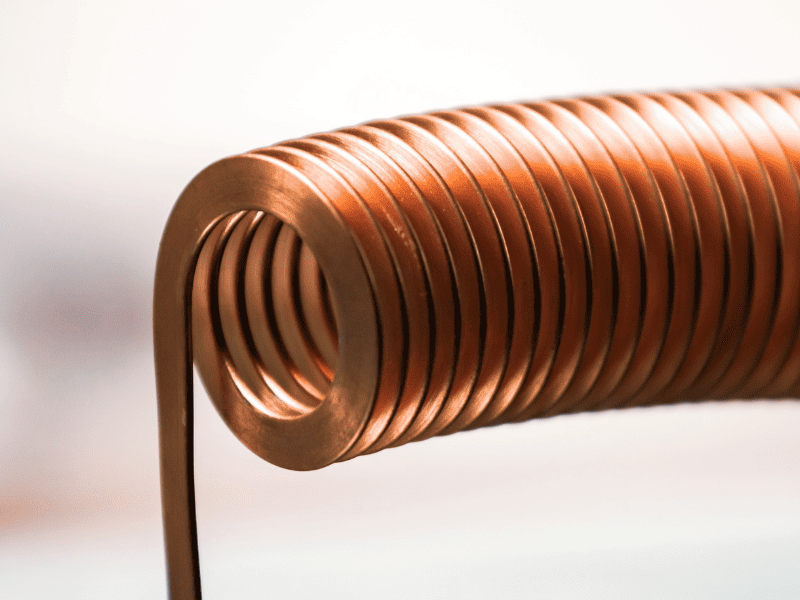
An antenna coil is a wound conductor designed to generate, receive, or interact with electromagnetic fields for radio frequency (RF) and wireless communication applications.
The coil acts as an inductive element that can transmit or receive signals by producing magnetic fields when electrical current flows through it. In receiving systems, the process works in reverse, where electromagnetic energy induces voltage within the coil.
An antenna coil is often used in:
- RFID systems
- Wireless communication devices
- Automotive electronics
- Radio receivers
- Sensor systems
- Remote control devices
- Industrial communication equipment
Because of its ability to efficiently interact with electromagnetic fields, the antenna coil remains a key component in modern wireless technology. [murata.com], [murata.com], [nvlpubs.nist.gov]
Why Is an Antenna Coil Important in Wireless Communication?
Wireless communication depends on the efficient transmission and reception of signals.
An antenna coil helps achieve this by:
- Generating magnetic fields
- Receiving electromagnetic signals
- Supporting frequency tuning
- Improving signal coupling
- Enhancing communication reliability
Without properly designed antenna coils, wireless communication systems may experience poor signal strength, reduced range, and inconsistent performance. [murata.com], [murata.com]
How Does an Antenna Coil Work?
The operation of an antenna coil is based on electromagnetic induction.
When current passes through the coil, a magnetic field forms around the winding. This magnetic field can interact with other nearby magnetic or electromagnetic systems to transmit or receive information.
How Does an Antenna Coil Generate a Magnetic Field?
An antenna coil consists of multiple turns of conductive wire arranged in a specific winding pattern.
When electrical current flows through the winding:
- A magnetic field develops around each conductor.
- The fields from individual turns combine.
- A stronger magnetic field is created around the coil.
- The system can transmit or receive electromagnetic signals.
The number of turns, wire diameter, and winding configuration all influence the strength of the magnetic field.
How Does an Antenna Coil Receive Signals?
In receiving applications, external electromagnetic fields induce voltage within the coil.
The induced voltage can then be:
- Detected
- Amplified
- Processed
- Converted into usable information
This principle enables antenna coils to function effectively in RFID readers, wireless sensors, and communication devices. [murata.com], [nvlpubs.nist.gov]
What Is a Coil Antenna?
A coil antenna is a type of antenna that incorporates a coiled conductor as the primary radiating or receiving element.
Rather than using long straight conductors, a coil antenna uses wound wire to create inductive properties and compact structures.
Coil-based designs are especially useful when physical space is limited.
Why Is a Coil Antenna Used Instead of a Traditional Antenna?
Many wireless systems cannot accommodate large antenna structures.
A coil antenna offers several advantages:
- Compact design
- Improved space utilization
- Easier integration into electronic devices
- Enhanced tuning flexibility
- Suitability for low-frequency applications
This is why coil antennas are commonly used in portable electronics, automotive systems, RFID applications, and embedded communication devices. [codingace.net], [murata.com]
What Are the Main Types of Coil Antenna Designs?
Several configurations are commonly used.
Helical Coil Antenna
A helical coil antenna uses a spiral winding structure.
Benefits include:
- Compact size
- Good RF performance
- Easy integration into devices
Loop Coil Antenna
A loop-based coil antenna uses conductor loops to generate and receive magnetic fields.
Applications include:
- Radio receivers
- RFID systems
- Signal detection equipment
Loop antennas often operate by interacting with magnetic fields rather than relying primarily on electric field radiation. [en.wikipedia.org], [nvlpubs.nist.gov]
What Are the Key Components of an Antenna Coil?
An antenna coil may appear simple, but its performance depends on several carefully engineered elements.
What Materials Are Used in Antenna Coils?
The most common materials include:
| Component | Typical Material |
| Conductor | Copper |
| Core Material | Air, ferrite, or specialized magnetic materials |
| Insulation | Enamel coating or insulating polymers |
| Support Structure | Plastic or composite materials |
Copper remains the preferred conductor because of its excellent electrical conductivity and winding characteristics.
How Does Coil Geometry Affect Antenna Performance?
The geometry of an antenna coil influences:
- Inductance
- Signal strength
- Resonant frequency
- Efficiency
- Radiation characteristics
Factors include:
- Number of turns
- Coil diameter
- Wire spacing
- Winding length
- Core material selection
Proper design is critical for achieving reliable communication performance. [codingace.net], [nvlpubs.nist.gov]
Where Are Antenna Coils Used?
The versatility of antenna coils makes them suitable for numerous industries and electronic systems.
How Are Antenna Coils Used in RFID Systems?
RFID technology often relies on antenna coils for communication between readers and tags.
The coil:
- Creates magnetic fields
- Enables signal coupling
- Supports data transmission
- Improves detection reliability
Many low-frequency RFID systems depend heavily on antenna coil technology. [murata.com], [murata.com]
How Are Antenna Coils Used in Automotive Electronics?
Automotive applications increasingly incorporate antenna-based systems.
Examples include:
- Keyless entry systems
- Vehicle access control
- Tire pressure monitoring systems
- Wireless communication modules
Internal company documentation also identifies Document 2.docx as listing antenna coils among important automotive coil applications. [Document 2 | Word].
How Are Antenna Coils Used in Consumer Electronics?
Consumer electronics frequently use compact coil antenna designs.
Applications include:
- Remote controls
- Smart devices
- Wireless sensors
- Communication accessories
The compact footprint of a coil antenna allows manufacturers to integrate wireless functionality without significantly increasing product size.
What Factors Influence Antenna Coil Performance?
Several design factors determine the effectiveness of an antenna coil.
How Does the Number of Coil Turns Affect Performance?
Increasing the number of turns generally:
- Increases inductance
- Strengthens magnetic field generation
- Improves signal sensitivity
- Influences operating frequency
However, excessive turns can also increase resistance and reduce efficiency.
Why Is Resonant Frequency Important for Antenna Coils?
Every antenna coil is designed to operate within a specific frequency range.
Proper tuning helps:
- Improve signal strength
- Increase efficiency
- Reduce interference
- Enhance communication reliability
Resonance is one of the most important considerations in coil antenna design. [codingace.net], [murata.com]
How Does Core Material Influence Antenna Coils?
Core materials significantly affect coil performance.
Common options include:
- Air cores
- Ferrite cores
- Specialized magnetic materials
The choice of core influences:
- Magnetic field strength
- Inductance
- Frequency behavior
- Signal coupling performance
Selecting the right core material is critical for application-specific performance requirements.
How Are Antenna Coils Manufactured?
The quality of an antenna coil depends heavily on the manufacturing process.
What Is the Antenna Coil Winding Process?
Manufacturing typically involves:
- Material selection
- Wire preparation
- Precision winding
- Coil shaping
- Terminal connection
- Testing and quality inspection
Modern winding systems help maintain consistent geometry and electrical characteristics across production runs.
Why Is Precision Important When Manufacturing Antenna Coils?
Even small variations in winding can affect:
- Inductance values
- Frequency response
- Signal quality
- Device performance
Precision winding technologies help manufacturers achieve greater consistency and reliability.
Internal planning documents such as Target KWs_Jan_Synthesis.xlsx and website content in Synthesis Website Content.docx indicate antenna coil winding as an important application area for advanced winding machinery. [Target KWs…_Synthesis | Excel], [Synthesis…te Content | Word]
What Challenges Can Occur When Designing Antenna Coils?
Although antenna coils offer many advantages, engineers must address several challenges during design and manufacturing.
What Common Design Challenges Affect Antenna Coils?
Potential issues include:
- Space constraints
- Signal interference
- Frequency optimization
- Inductance control
- Thermal management
These factors must be carefully balanced to achieve reliable performance.
How Can Engineers Improve Antenna Coil Performance?
Several best practices help improve results:
- Optimize coil geometry.
- Select appropriate core materials.
- Use high-quality conductors.
- Maintain winding consistency.
- Validate performance through testing.
These strategies improve both manufacturing quality and communication performance.
Conclusion
The antenna coil remains one of the most important components in wireless communication and electromagnetic signal transfer systems. By generating and receiving magnetic fields, antenna coils enable reliable communication across applications ranging from RFID systems and automotive electronics to industrial equipment and consumer devices.
Whether designing a compact coil antenna, selecting materials for specialized antenna coils, or optimizing manufacturing processes, engineers must carefully balance performance, frequency requirements, and manufacturing precision.
At Synthesis Winding Technologies, we combine decades of expertise in precision coil winding, automation, and advanced winding machinery to support manufacturers producing high-quality antenna coils and RF components. Our engineering-driven solutions help customers achieve greater consistency, precision, and productivity across demanding winding applications.
Looking for advanced winding technology for antenna coil manufacturing? Contact Synthesis Winding Technologies today to explore winding solutions designed for precision, scalability, and long-term performance.
FAQs
What is an antenna coil?
An antenna coil is a wound conductor used to generate, receive, or interact with electromagnetic fields for wireless communication applications.
What is a coil antenna?
A coil antenna is an antenna design that uses a coiled conductor structure to transmit or receive electromagnetic signals.
Where are antenna coils commonly used?
Antenna coils are used in RFID systems, automotive electronics, wireless sensors, communication devices, and consumer electronics.
How does an antenna coil work?
An antenna coil creates a magnetic field when current flows through it and can also receive electromagnetic signals through induction.
What materials are commonly used in antenna coils?
Copper conductors, ferrite cores, air cores, insulating coatings, and support structures are commonly used in antenna coil manufacturing.
How does coil geometry affect antenna performance?
Factors such as the number of turns, diameter, winding length, and wire spacing influence inductance, frequency response, and signal efficiency.
Why is precision important in antenna coil manufacturing?
Precision winding helps maintain consistent inductance, frequency characteristics, signal quality, and overall device performance.