

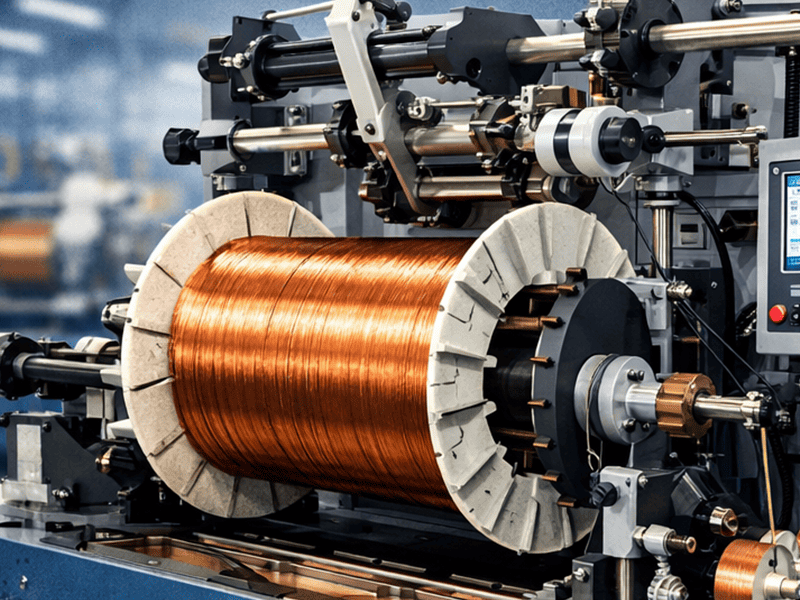
A Complete Guide to Transformer Winding Machines That Scale Quality and Throughput
Introduction
Selecting the right transformer winding machine isn’t just a technical choice; it’s a strategic investment that shapes your production reliability, delivery commitments, and long-term cost structure. A well-engineered transformer winding machine becomes the backbone of coil consistency, enabling you to scale output without sacrificing quality.
When your winding system delivers precise turn counts, uniform pitch, stable tension, and flawless insulation alignment, you eliminate the hidden inefficiencies that slow down lines, inflate rework, or compromise test results. In short, the machine you choose determines how confidently you can promise performance, protect margins, and meet demand without operational strain.
What is a transformer winding machine and why should you care about it in your operation?
A transformer winding machine is the system responsible for forming the coils that define a transformer’s electrical behavior. It winds copper or aluminum conductors onto the core with controlled turns, spacing, layering, and tap positions. These parameters directly shape how effectively the transformer manages voltage and magnetic coupling.
For your operation, the significance is straightforward:
When winding precision improves, losses drop, performance stabilizes, and downstream assembly becomes more predictable. Consistent coil construction also minimizes leakage inductance and ensures the delivered voltage aligns with design expectations, making winding accuracy a foundational driver of reliability in distribution and industrial grade transformers.
How do transformer windings work?
The working principle is electromagnetic induction. When alternating current flows through the primary, it generates a changing magnetic field in the core that induces voltage in the secondary. Your transformer winding machine must preserve the geometry and layering that make this transfer efficient and safe.
- AC applied to the primary produces a time varying magnetic field around the coil.
- The iron core channels the flux, strengthening coupling between primary and secondary windings.
- The changing flux induces voltage in secondary according to Faraday’s law.
- The induced voltage is proportional to the turn ratio, so turn count accuracy is non-negotiable.
- Tight control of per turn spacing and interlayer insulation reduces leakage flux and electric field stress.
- Correct tap placement supports voltage regulation and compatibility with site conditions.
Which transformer winding machine types should you compare first?
Industry overviews and vendor catalogs generally group options into three practical categories. This makes it easier to align capability with your mix and volumes.
Where do manual or benchtop programmable systems make sense?
Manual and benchtop programmable units suit small coils, prototypes, and service work. Expect variable speed, counters, and basic tension in compact footprints. They are also useful alongside a transformer coil winding machine or a transformer bobbin winding machine when you produce electronics grade coils without tying up your heavy equipment.
When is a semi-automatic transformer winding machine the right step up?
Semi-automatic platforms add PLC or HMI control, servo traverse for accurate layer winding, programmed stops at turns, and interlayer paper feeds. Established pages outline wire size windows, coil envelopes, swings, and coil weights for HV and distribution applications, helping you match machine coverage to your SKU set.
When should you commit to an automatic transformer coil winding machine?
If you need higher throughput with minimal operator touch, an automatic transformer coil winding machine synchronizes wire guidance with rotation, manages tension and paper insertion, and keeps pitch within tight limits for both round and rectangular conductors.
How do LV and HV coil requirements change what your transformer winding machine must do?
Let’s evaluate how low voltage coils and high voltage coils demand different winding capabilities from a transformer winding machine, and what essential features are required to handle each.
What should a transformer winding machine include for low voltage coils and foils?
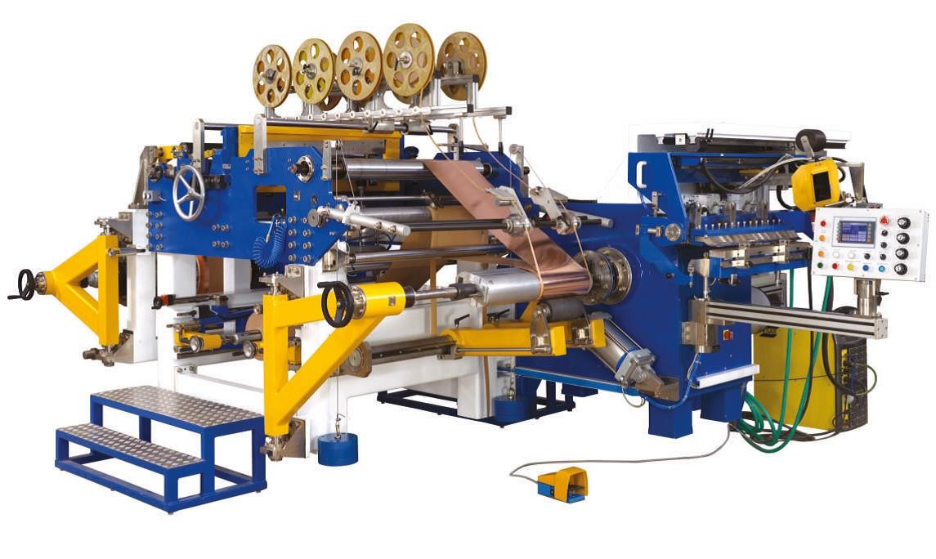
Low voltage coils often use larger round conductors or foil. You will want heavy duty traverse assemblies, edge strip holders, interlayer paper stands, accurate foil tensioning, and capacity for taller coils and higher coil weights.
These features keep each layer flat, prevent conductor buckling, and reduce scrap on large cross section conductors used in distribution transformers.
What should a transformer winding machine include for high voltage coils?
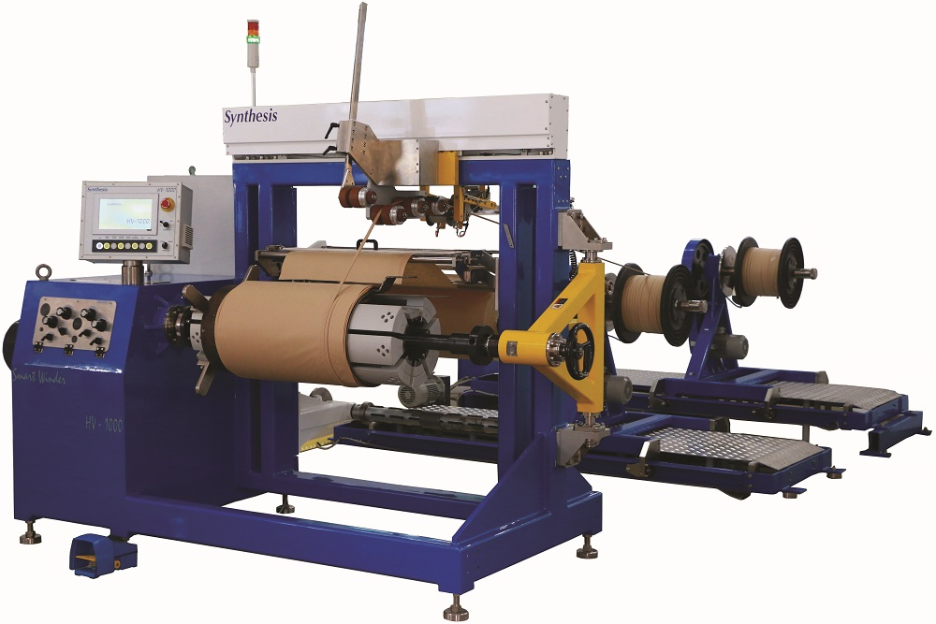
High voltage coils demand tighter per turn pitch control, disciplined interlayer insulation placement, and repeatable lead exits. Semi-automatic HV coil winders from established builders specify enamel wire ranges, coil OD and swing limits, coil weight capacity, and HMI driven graded layer techniques that help contain electric field stress and improve test yield.
When should you invest in a rectangular transformer winding machine?
Choose a rectangular transformer winding machine if your roadmap includes rectangular, oval, or special shape coils where corner fill and straight edge uniformity are critical. Modern rectangular platforms support segmented winding programs, multi-layer patterns, proportional spacing control, and program storage that shortens changeovers across special shapes.
Which features should you insist on from transformer winding machine manufacturers?
Before we get specific, here are the core features a reliable transformer winding machine should include to ensure precision, consistency, and long-term performance.
- Stable tension control so wire or foil remains seated without micro movement that can abrade insulation or create hot spots. Rectangular and power coil machines often use proportional linkage or servo tensioning to keep spacing uniform.
- Accurate servo traverse and pitch repeatability to hold layer geometry for spiral, layer, and disc windings on both LV and HV coils. Distribution focused systems emphasize programmed pitch control and graded layer logic for consistency.
- Programmability and data including recipe storage, automatic stop at turns, interlayer logic, and event logs that support traceability and fast changeovers across product families.
- Lifecycle service and training with commissioning, preventive maintenance, spares availability, and operator education. Builders with long running installed bases and structured support reduce downtime risk and protect OEE.
What are the key differences between machine categories that you should compare side by side?
| Category | Best for | Core features | Strengths | Considerations |
| Manual or benchtop programmable | Small coils, prototypes, service, bobbins | Variable speed, counters, basic tension, compact frames | Low cost, fast setup, flexible for R and D | Operator dependent, limited throughput |
| Semi-automatic transformer winding machine | HV and distribution coils, moderate volume | PLC or HMI, servo traverse, graded layer logic, programmed stops, interlayer paper feed | Faster cycles with accurate pitch and insulation placement | Requires operator oversight and recipe discipline |
| Automatic transformer coil winding machine | Higher volume coils, mixed round and rectangular | PLC control, synchronized wire guider, integrated paper feed, higher RPM | High throughput and consistency with fewer manual steps | Higher capital cost and training curve |
| Rectangular transformer winding machine | Rectangular, oval, special shapes | Segmented programs, proportional spacing, generous program storage | Uniform corner fill and quick changeovers across shapes | Shape specific fixtures and operator training needs |
| LV foil focused systems | Low voltage foil or large conductors | Foil tension control, edge strip holders, interlayer paper stands | Excellent layer flatness and reduced scrap on large conductors | Larger footprint and heavier coil handling |
How does winding theory influence connection choices during setup?
Your transformer winding machine does not dictate Delta or Wye, yet its precision ensures the finished coils meet turns ratio, tap, and insulation objectives required by those schemes.
For example: In many commercial and industrial projects you will see a Delta primary paired with a grounded Wye secondary, which depends on accurate winding geometry and lead placement to deliver balanced voltages and predictable protection behavior.
How can Synthesis help you select and deploy the right transformer winding machine quickly?
Synthesis Winding Technologies brings a portfolio that covers semi automatic HV coil winders, distribution class transformer winding machine platforms with HMI driven graded layer control, and LV foil systems that integrate paper and edge strip handling.
You get published ranges for conductor sizes, coil envelopes, and coil weights, plus commissioning, training, and service programs designed to protect uptime after go-live.
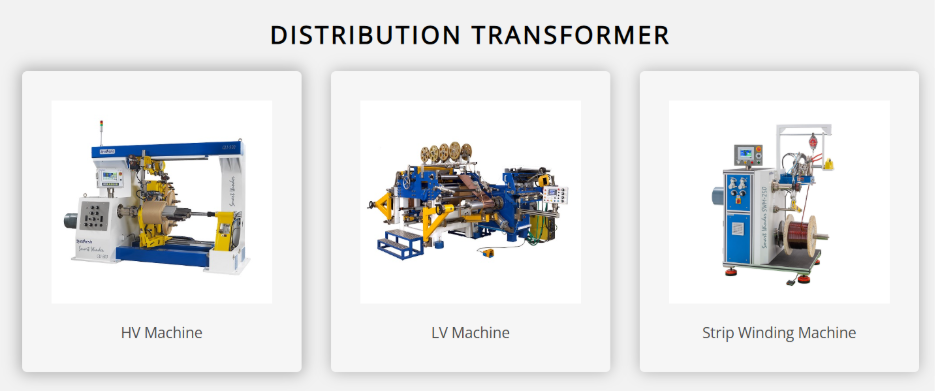
You can also choose by model using Synthesis’s transformer winding machine catalog to compare automation levels, coil capacities, and application focused variants.
FAQs
1. How do I justify a transformer winding machine on ROI, not just specs?
Quantify scrap reduction from better tension and traverse control, cycle time cuts from automated paper and stops at turns, and first pass yield gains from consistent layering and tap placement. Vendors that publish machine envelopes and provide commissioning plus training help you hit these targets faster in production.
2. When do I need a foil capable transformer wire winding machine versus a dedicated foil line?
If LV foil coils are frequent and heavy, a foil focused system with edge strip holders and paper stands is the safer bet. If foil is occasional, a versatile transformer wire winding machine with quick change tooling may suffice, though you should plan longer changeovers.
3. Can I run small electronics coils without disrupting power coil production?
Yes. Keep a compact transformer coil winding machine or a small transformer bobbin winding machine for EI core bobbins so you do not bottleneck a large power coil line with small lot work.
4. What should I demand from transformer winding machine manufacturers on service?
Insist on documented commissioning, preventive maintenance plans, spare parts availability, and operator plus maintenance training. Builders that support long lived installed bases and offer routine and urgent care keep OEE stable as volumes grow.
5. How do I plan for rectangular or oval coils if that is on the roadmap?
Budget for a rectangular transformer winding machine with segmented programs and proportional spacing control. This ensures corner fill and straight section uniformity across shapes and makes product changes faster as the mix evolves.
6. What is the shortest path to a shortlist of credible vendors?
Start with transformer winding machine manufacturers that publish transparent specs and have a service footprint in your region, then validate coverage against your conductor set, coil envelope, and volumes through a sample run and a commissioning plan.