

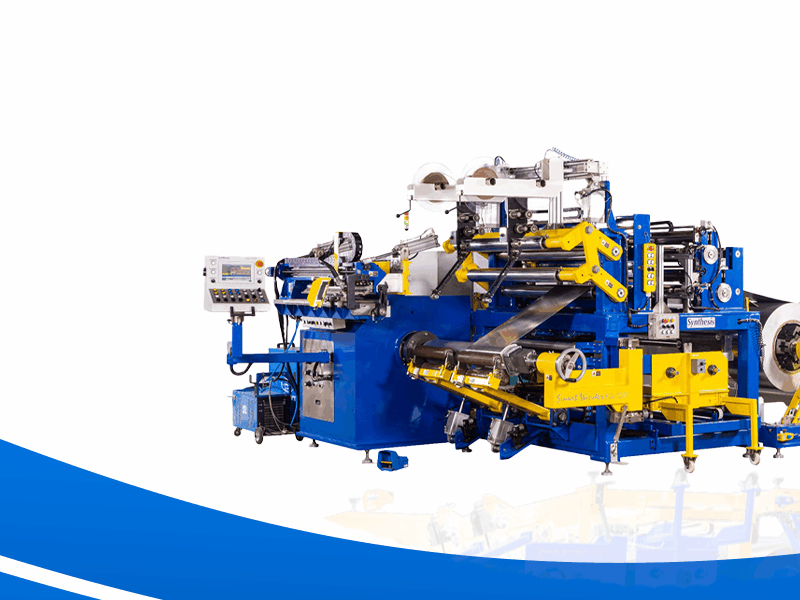
Coil Winding Machine: The Practical Buyer’s Guide to Types, and Working
Transform Your Manufacturing Output: The Complete Guide to Automatic Winding Machines
Introduction
Scaling reliable electrical production; whether for motors, transformers, inductors, or compact electronic components, starts with how consistently your coils are wound. Even slight variations in tension, pitch, or layering can impact inductance, insulation strength, heat behavior, and overall electrical performance.
That’s why modern manufacturing lines increasingly rely on automated winding systems to achieve the uniformity, speed, and repeatability that hand‑wound or semi‑manual processes simply can’t sustain at scale.
As demand grows for higher efficiency components, tighter tolerances, and faster delivery cycles, the capability of your coil winding process becomes a direct driver of quality, cost, and production reliability.
This guide breaks down how different types of winding machines work, what distinguishes precision systems from entry‑level equipment, and what to look for when choosing the right machine for your product mix.
What is a coil winding machine?
A coil winding machine is a manufacturing system that winds copper or aluminum wire in programmed patterns on defined forms, so the resulting coil meets electrical and dimensional requirements for its end use.
How does a coil winding machine work?
- Load and set tension
The operator loads the wire spool and sets tensioners and guides to prevent slack or breakage during winding.
- Mount the form
The bobbin, stator, rotor, or transformer core is installed on the mandrel or spindle. Automated cells may use pick and place, or robotics.
- Program the recipe
You enter turns, speed, traverse width, pitch, and layering pattern in the HMI or CNC. An automatic coil winding machine stores these parameters for repeatability.
- Execute winding
The spindle rotates while the traverse lays the wire at the programmed pitch. Sensors monitor alignment and tension for consistent precision coil winding.
- Terminate leads
The machine cuts the wire and, on advanced systems, may solder or crimp terminations automatically.
- Finish and verify
Many industrial lines add resistance checks or insulation of integrity tests before release to downstream processes.
What is the process of winding and how does it influence coil performance?
The winding process determines how consistently a coil meets its required inductance, insulation strength, and magnetic behavior. Each method manages turn placement, tension, and geometry differently, which directly affects electrical reliability.
- Layer Winding
Wire is arranged in uniform layers across the bobbin or core, enabling stable inductance and predictable insulation performance.
- Cross Winding
Wire is laid diagonally, creating crossed patterns that produce compact and mechanically stable coils. Often used when high coil density is required.
- Toroidal Winding
Wire is threaded through a ring‑shaped core, creating highly efficient magnetic circuits with minimal losses; ideal for toroidal transformers.
- Needle Winding
A needle inserts the wire into narrow stator slots, ensuring precise placement for motor and generator coils.
- Flyer Winding
The flyer rotates around the component while feeding wire, commonly used for armature and magnet coils.
What types of coil winding machines should you consider for different applications?
Coil winding machines vary widely in their automation levels, use cases, and configuration. Leading industry sources categorize them into the following essential types:
Which applications suit a manual coil winding machine?
Manual machines are ideal for prototypes, repairs, and low‑volume workshop tasks. They rely heavily on operator skills but offer low upfront cost and simple operation.
When is a semi‑automatic coil winding machine the better fit?
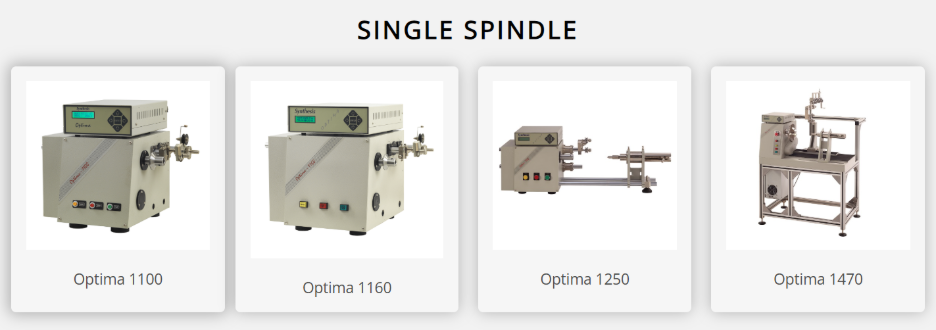
Semi‑automatic machines combine motor‑driven motion with operator‑controlled parameters. They boost productivity without sacrificing flexibility, making them suitable for mid‑volume work.
Why should you choose an automatic coil winding machine?
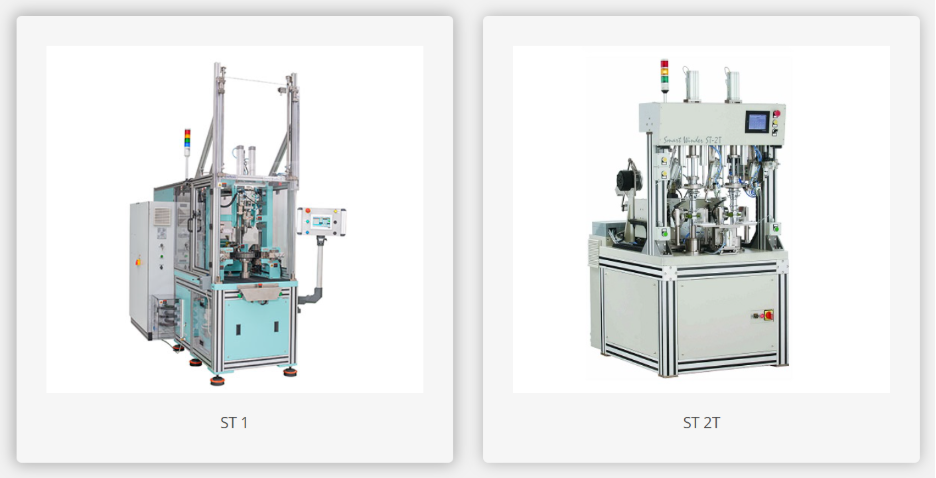
Automatic winding machines are built for mass production. They manage turns, pitch, tension, and traverse movement with programmed precision, reducing manual fatigue and variability. They are preferred for transformers, motors, and inductor manufacturing.
Where does a CNC coil winding machine add value?
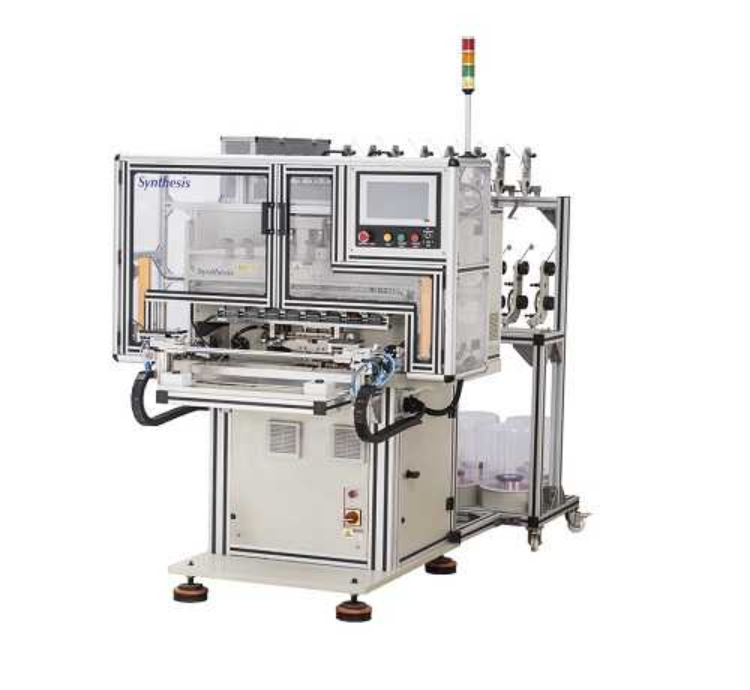
CNC coil winding machines offer advanced axis control and programmable patterns, making them ideal for industries requiring tight tolerances; such as aerospace, EV components, and high‑grade electronics.
Why are toroidal winding machines necessary for toroidal coils?
Threading and winding a toroidal core manually are slow and error‑prone. Toroidal-specific machines automate threading paths, ensuring compact, consistent winding across complex geometries.
Which applications require armature, stator, or rotor winding machines?
These machines are engineered for electric motor coils. They place wire into slots with precision at high speeds, ensuring accurate magnetic performance and thermal behavior.
Which coil winding machine manufacturers should you evaluate first?
Synthesis Winding Technologies
Synthesis offers an extensive portfolio of industrial coil winding machines, including automatic, semi‑automatic, CNC, and multi‑spindle coil winding machines. Their systems support motors, transformers, EV coils, solenoids, and electronics, backed by strong commissioning and service capabilities.
Transwind Technologies
Transwind provides LV foil winders, HV coil winders, toroidal machines, and industrial coil winding equipment with servo-based tension control for consistent winding performance.
Spark Controls
Spark Controls delivers CNC and stator winding solutions with deep engineering pedigree (ISRO/NGEF roots) and is known for automation reliability in motor and transformer applications.
Seallence
Seallence manufactures CNC coil winding equipment and customized industrial coil winding machines for motors, submersible pumps, and inductor applications, emphasizing accuracy and flexibility.
KIJ Machinery Hub
KIJ is widely adopted for shop‑floor needs like fan motors, pump motors, and small industrial coils. Models such as the KIJ C10 and C20 offer value‑driven semi‑automatic and automatic winding options.
Why is Synthesis the best choice for modern, scalable coil winding?
Selecting the right coil winding machine comes down to precision, throughput, recipe control, and dependability. Synthesis delivers all four; along with a wide model range that helps match the machine to your coil geometry, production volume, and automation goals.
From programmable single‑spindle solutions to CNC‑driven precision winding, our technology supports diverse applications while maintaining consistent coil quality at scale.
Get in touch with our team today!
FAQs
- Which winding process offers the best insulation uniformity?
Layer winding delivers the most consistent insulation of spacing and predictable inductance.
- When should you upgrade to a CNC coil winding machine?
When your coils require high precision, complex patterns, or aerospace/EV‑grade tolerances.
- Do toroidal coils require a dedicated machine?
Yes, toroidal winders automate threading and ensure consistent tension and compactness.
- Which machine type is ideal for motor coil production?
Armature and stator winding machines designed for slot-based placement.
- How do automatic and semi‑automatic machines differ most?
Automatic machines control tension, pitch, and traverse programmatically, reducing manual dependency. Semi‑automatic machines still need operator control.
- Why is Synthesis recommended first?
Because of its breadth of solutions, strong engineering capability, and proven performance across industries requiring precision winding.