

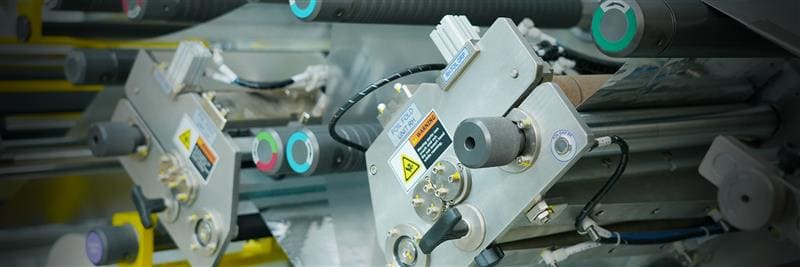
The Role of Winding Machines in Renewable Energy Systems
Introduction
The world accelerates its transition toward renewable energy. However, storing intermittent power from solar, wind, and other green sources and releasing it reliably when needed is proving to be a challenge. Energy storage systems, from battery packs and supercapacitors to transformers and inductive components have become the apex of this transition. They stabilise grids and ensure energy is available on demand.
Behind the scenes, high‑precision winding machines are critical to manufacturing the coils, inductors, transformers, and motor components that make these storage and conversion systems possible. By pushing the boundaries of efficiency and supporting long‑term sustainability, modern winding technology is quietly shaping the way clean power is produced, stored, and delivered.
Why Winding Machines Matter in Renewable Energy Storage?
Every major storage system and power electronics stage in renewable installations depends on electromagnetic components built through controlled winding processes. Inductor coils, transformer windings, chokes, and motor stators are essential for converting, conditioning, and routing energy between DC sources, AC grids, battery packs, and end‑use loads. Solar inverters use inductors and transformers to turn variable DC power into grid‑synchronised AC. Wind turbine generators rely on stator and rotor windings to convert kinetic energy into electrical output. Battery energy storage systems incorporate numerous coils and transformers within converters, chargers, and protection circuits.
Winding machines ensure these components are produced with the geometric precision, repeatability, and electrical characteristics required to handle high voltages and currents while minimising losses. Consistent wire placement, stable tension, and uniform layer build-up reduce hotspots, stray fields, and noise, all of which are crucial in storage applications that must be both efficient and dependable over long service lives.
Enabling Efficient Energy Conversion and Storage
For renewable energy storage systems, every fraction of a percent lost in conversion directly impacts project economics and sustainability outcomes. Poorly manufactured coils can introduce additional resistance, leakage, and core losses that waste energy as heat. Modern winding machines use servo‑controlled motion, intelligent tension systems, and CNC-guided paths to optimise wire packing and magnetic utilisation in inductors and transformers.
This precision leads to lower copper losses and improved magnetic coupling, contributing directly to higher efficiency in inverters, DC‑DC converters, and grid‑tied storage interfaces. For large‑scale battery farms, solar‑plus‑storage plants, and EV charging hubs, even modest efficiency gains compound into significant energy savings over the life of the installation. In practical terms, better windings help renewable installations deliver more usable power from the same amount of natural resource input, strengthening the case for clean energy adoption.
Automation and Scale for a Renewable Future
As demand for renewable energy and storage systems expands, manufacturers face the dual challenge of scaling production and maintaining quality. Advanced, automated winding machines address both needs. Fully automatic or CNC winding equipment can produce coils, transformers, and stators at high throughput while maintaining tight tolerances across thousands of units. Automation reduces operator‑dependent variability and supports just‑in‑time manufacturing models that are essential in fast‑growing renewable sectors.
Integration of sensors, closed‑loop controls, and quality checks allows winding machines to detect anomalies. Anomalies like tension spikes or misalignment in real time will be detected before they propagate into faulty components. This data‑driven approach not only improves yield and reduces scrap but also supports traceability requirements in grid‑connected projects, where component performance and compliance must be documented thoroughly.
Supporting Sustainability Throughout the Component Lifecycle
The role of winding machines in sustainability goes beyond their contribution to energy conversion efficiency. By optimising material usage and improving product reliability, they help reduce waste and extend component life. Precision winding minimises excess copper and insulation usage, lowering the embedded carbon footprint of inductors, transformers, and motors. Improved build quality decreases the likelihood of premature failure, thereby reducing the need for replacements and cutting the environmental cost associated with manufacturing and transporting new parts.
In some cases, winding technology also supports sustainable refurbishment and reuse. Motors and transformers in renewable applications can be rewound and upgraded rather than discarded, giving existing hardware new life with improved efficiency. This circular approach aligns with broader sustainability goals, enabling operators to upgrade system performance without a complete equipment overhaul.
Applications Across Renewable Energy Storage Ecosystems
The influence of winding technology spans the full range of renewable storage systems. In solar-plus-storage plants, high‑frequency transformers and inductors produced by specialised winding machines are integral to string inverters, hybrid inverters, and central energy management units. In wind farms, wound generator stators, pitch control motors, and auxiliary drives rely on robust winding structures to withstand fluctuating loads and harsh environmental conditions.
Battery energy storage systems (BESS) incorporate numerous wound components in DC‑DC converters, chargers, and grid interface equipment. All these benefit from tightly controlled inductance and thermal behaviour. Supercapacitor banks and power‑conditioning units also draw on wound film capacitors and chokes to manage fast charge and discharge cycles with minimal losses. Across these diverse applications, winding machines act as the common manufacturing backbone that turns design specifications into high‑performing, field‑ready hardware.
Innovation: Smarter Winding for Smarter Grids
Emerging technologies are further enhancing how winding solutions serve renewable energy and storage systems. Smart coil winding machines now integrate automation, sensor feedback, and connectivity to support Industry 4.0 manufacturing models. Machine learning and optimisation algorithms are increasingly used to fine‑tune winding parameters, predict maintenance needs, and adapt processes for new materials or geometries without extensive manual reconfiguration.
Researchers are also exploring renewable‑powered winding setups, where the machines themselves are driven by onsite solar or wind sources, reducing the carbon footprint of component manufacturing. Combined with energy‑efficient drives and regenerative braking on winding axes, this creates a virtuous cycle: clean energy systems manufactured using clean energy inputs. Such innovation underscores how winding technologies can contribute both to operational efficiency and to the broader narrative of industrial sustainability.
Conclusion
As renewable energy adoption accelerates and storage systems become central to grid reliability, the importance of high‑quality electromagnetic components will only grow. Winding machines, through their role in producing efficient, durable coils, transformers, and motors are fundamental to this progress.
By enhancing efficiency, supporting scalable production, and aligning with long‑term sustainability goals, they help ensure that the clean energy transition is both technically robust and economically viable. For manufacturers and project developers alike, investing in advanced winding capabilities is not just a production decision. It is a strategic step toward building the resilient, low‑carbon energy systems the future demands.