
The Role of Winding Machines in Improving Electric Generator Efficiency
Introduction
Every percentage point of efficiency matters when you’re generating power at scale. A 1% improvement in a 100 MW power plant translates to enough additional electricity to power 750 homes annually. Yet many manufacturers still treat the winding process as a routine manufacturing step rather than the efficiency-defining moment it truly is.
What if the secret to unlocking unprecedented performance in electric generators isn’t just in the materials or design, but in the precision of each individual coil?
This question reshapes how we think about power generation. Modern winding machines have evolved from simple coil-winders into sophisticated systems that directly influence generator efficiency, reliability, and operational lifespan.
Connection Between Winding Quality and Generator Performance
Electric generators convert mechanical energy into electrical power through electromagnetic induction. This is a process that depends on the precise arrangement of conductive windings within the machine.
These windings aren’t just wires wrapped around a core; they’re carefully engineered electromagnetic circuits where every turn, tension, and placement affects overall performance.
Poorly wound coils create multiple efficiency drains. Loose windings generate excess heat through increased resistance, forcing cooling systems to work harder and consuming valuable energy.
Inconsistent tension leads to uneven current distribution, creating hotspots that degrade insulation and shorten generator lifespan. Misaligned coils produce harmonic distortions, reducing power quality and forcing downstream equipment to compensate.
Consider this: a typical large generator contains over 50 kilometres of copper winding. If just 5% of that length suffers from suboptimal tension or placement, the cumulative efficiency loss can exceed 2%. For a utility-scale operation, that’s millions in lost revenue over the generator’s lifetime.
Modern winding machines eliminate these variables through computer-controlled precision. They maintain consistent tension, ensure perfect layer alignment, and monitor every parameter in real-time. This level of control transforms winding from an art into a repeatable science, directly translating into measurable efficiency gains.
How Modern Winding Machines Transform Manufacturing Precision?
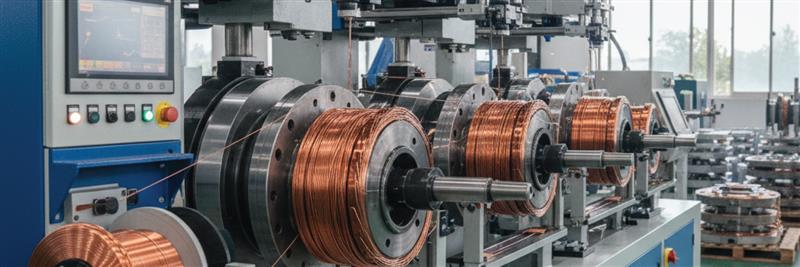
Today’s winding machines represent a quantum leap from their mechanical predecessors. Where older machines relied on operator skill and manual adjustments, contemporary systems integrate servo motors, laser guidance, and AI-driven quality control.
Precision tension control systems
Precision Tension Control Systems use closed-loop feedback to adjust wire tension microsecond by microsecond. This prevents the microscopic stretching and compression that creates resistance variations.
When winding high-voltage stator coils for large electric generators, these systems maintain tension accuracy that human operators simply cannot match.
Multi-axis coordination
Multi-Axis Coordination allows complex winding patterns that optimize electromagnetic fields. The machine’s software calculates the ideal coil geometry based on the generator’s specific operating parameters. This includes rotational speed, expected load profile, and thermal conditions.
Post this, it executes these patterns with robotic precision, layering conductors in ways that minimize eddy current losses and maximize flux linkage.
In-process inspection technology:
In-process inspection technologies catch defects effectively. Vision systems scan each layer for gaps or overlap, while capacitive sensors verify insulation integrity. If a deviation occurs, the machine stops immediately. This prevents the accumulation of errors which might compromise generator efficiency.
These capabilities matter because electric generators operate under immense stress. The electromagnetic forces acting on windings during full load can exceed several tons per meter.
Windings that aren’t perfectly formed and secured will deform over time, creating the very inefficiencies these advanced machines prevent.
Key Efficiency Gains from Advanced Winding Technology
The impact of precision winding on generator efficiency manifests in several measurable ways. Understanding these mechanisms helps manufacturers and operators appreciate why investing in advanced winding machines delivers returns far beyond the production floor.
Reduced copper losses
Reduced copper losses represent the most direct efficiency improvement. Precision winding eliminates the air gaps and crossing wires that increase effective conductor length. When windings pack tightly and uniformly, current flows through the shortest possible path.
Improved thermal performance
Improved thermal performance emerges from consistent winding patterns that distribute heat evenly. Traditional winding often creates dense pockets where heat accumulates, forcing designers to derate generators or install oversized cooling systems.
Uniform winding density allows optimal heat dissipation, letting generators operate closer to their thermal limits without risk. This thermal efficiency translates directly into higher continuous power output.
Improved power quality
A better power quality results from symmetrical winding geometries that minimize harmonic generation. Precisely wound stators generate cleaner sine waves, reducing filtering needs and improving compatibility.
For data centres and manufacturing facilities, this power quality improvement alone justifies the investment in premium winding processes.
Lower mechanical losses
This occurs because balanced windings reduce vibration and electromagnetic imbalance. When every coil matches its neighbours perfectly, the rotor experiences uniform forces, decreasing bearing wear and windage losses.
Over a 30-year generator lifespan, these reductions in mechanical losses compound into substantial efficiency gains.
Manufacturers report that generators produced with advanced winding machines consistently achieve efficiency ratings 0.5-1.5% higher than specification. While this might seem modest, the power generation industry operates on thin margins where such improvements separate market leaders from followers.
Innovations Shaping the Future of Winding Automation
The evolution of winding machines continues accelerating, driven by demands for higher efficiency and the integration of electric generators into smarter grid systems. These innovations promise to push efficiency boundaries even further.
AI-powered process optimization
AI-Powered Process Optimization represents the frontier of winding technology. Machine learning algorithms analyse thousands of winding parameters to discover optimal patterns for specific applications. They consider not just electromagnetic performance but also manufacturing yield, material utilization, and maintenance accessibility.
As these systems train on more production data, they continuously refine winding recipes, extracting incremental efficiency improvements that human engineers might miss.
Adaptive winding for speed generators
Adaptive Winding for Variable Speed Generators addresses the growing market for renewable energy applications. Unlike traditional constant speed generators, wind turbines and hydroelectric units operate across wide speed ranges.
New winding machines can create non-uniform coil distributions that maintain high efficiency throughout the operating envelope. This innovation proves critical as power systems increasingly rely on variable renewable sources.
Integrated insulation systems
Integrated Insulation Systems combine winding and insulation application into a single process. Advanced machines apply nano-enhanced insulation materials during winding, ensuring perfect conformity to conductor surfaces.
This eliminates air pockets that cause partial discharge. The result is electric generators that maintain their initial efficiency longer, extending the period before maintenance becomes necessary.
Digital twin integration
Digital Twin Integration connects winding machines to virtual models of the finished generator. As each coil takes shape, the system simulates its impact on overall performance, making micro-adjustments to optimize the final product. This closed-loop integration between manufacturing and design represents a fundamental shift from building to specification toward building to performance.
These innovations create a data ecosystem that accelerates industry-wide efficiency improvements.
Practical Implications for Your Power Generation Strategy
Understanding the link between winding machines and generator efficiency has immediate practical consequences for different stakeholders in the power ecosystem.
Generator manufacturers
For Generator Manufacturers, the choice of winding equipment directly impacts product competitiveness.
Customers increasingly demand efficiency guarantees, and modern winding machines provide the process capability to meet aggressive performance targets. The capital investment typically pays back within 18-24 months through premium pricing and reduced warranty claims.
Power plant operators
For Power Plant Operators, specifying generators produced with advanced winding technology delivers lifetime value. When procuring new electric generators, request detailed winding process specifications.
Ask suppliers about tension control tolerances, inspection methods, and efficiency variance data. The most efficient generators often cost 5-10% more upfront but generate 20-30% additional value over their operational life.
Maintenance teams
For Maintenance Teams, recognizing winding quality helps predict performance trajectories.
Generators with precision windings maintain their efficiency longer and exhibit more predictable degradation patterns. This allows for better maintenance scheduling and more accurate lifecycle costing.
Renewable energy developers
For Renewable Energy Developers, advanced winding machines enable the specialized generators that variable speed applications require.
When evaluating wind turbine or hydroelectric equipment, prioritize suppliers who invest in modern winding capabilities. The efficiency gains in partial-load operation significantly impact project economics.
The question isn’t whether to adopt these technologies, but how quickly you can integrate them into your operations. As grid decarbonization accelerates, the demand for highly efficient electric generators will intensify.
Early adopters of advanced winding processes position themselves as leaders in the next generation of power equipment.
Conclusion
The role of winding machines in improving electric generator efficiency extends far beyond simple manufacturing automation. These systems have become strategic assets that determine product performance, operational economics, and competitive positioning in the power generation market.
Every coil wound with precision contributes to a more efficient energy future. As innovations in AI, materials science, and digital integration continue transforming winding technology, the gap between traditionally manufactured generators and those produced with advanced equipment will only widen.
The power generation industry stands at an inflection point where manufacturing process capability directly translates to market success. Investing in modern winding machines isn’t just about keeping pace; it’s about leading the charge toward unprecedented efficiency in electric power generation.